
A new forthcoming book by Springer
Book editor: Ned Kock
This Web site has been created to serve as a resource for chapter authors. The book will be published by Springer as soon as it is completely drafted. Chapter authors are requested to provide the following:
Click on the links below to go directly to a content section. Each section contains specific instructions for the preparation of chapter materials.
[ Brief Book Synopsis ] [ IS-EP Research ] [ Preparing Chapters ] [ Referencing Style ] [ Short Bio and Contact Information ] [ Copyright Transfer ] [ References ]
This book will be a compilation of invited chapters written by leading information systems (IS) and evolutionary psychology (EP) researchers from all over the world. The main goal of this book is to serve as a reference for IS research building on EP concepts and theories. This line of research is referred to here as IS-EP research. The book will be organized in three main parts:
Part I: Will focus on EP concepts and theories that can be used as a basis for IS-EP research.
Part II: Will provide several examples of IS-EP research in practice.
Part III: Will summarize current debate on IS-EP research, including debate regarding its philosophical foundations, possible use in Ph.D. programs, and credibility of findings obtained through its use.
It is expected that the book will include chapters written by various IS, EP and/or IS-EP researchers from different countries; including countries in Europe, Australasia, and the Americas. Those researchers will represent different IS-EP research perspectives. Many of the chapter authors will be prominent scholars who are widely recognized as authors of seminal ideas in connection with IS, EP and/or IS-EP research.
The field of EP is concerned with evolved psychological traits. These are mental traits that are hypothesized to have a genetic basis, and that are assumed to have evolved among our ancestors because they enhanced the reproductive success of those ancestors that possessed them. Many evolved psychological traits are present in modern humans, and likely influence our behavior toward modern technologies. Conducting research about these traits and their influence on our behavior toward modern technologies is the essence of what is called here IS-EP research.
The diagram in Figure 1 depicts how a psychological trait P would have evolved in our evolutionary past by natural selection, by enhancing the survival success of the individuals that possessed the trait P. (Traits could also have evolved through sexual selection, whereby the trait would have enhanced the mating success of the individuals that possessed it.) The trait P was associated with a genotype G, which was a set of interrelated genes that influenced the formation of P. An example of psychological trait P would be “attention to colors”. Individuals possessing this trait would have an instinctive response to objects displaying colors other than black and white, paying more attention to them. Individuals not possessing this trait would pay no particular attention to those objects.
Figure 1: Evolution of psychological traits by natural selection
(Note: Psychological traits may also evolve by sexual selection, by increasing mating
success, and by other mechanisms such as genetic drift)
The psychological trait P influenced ancient task performance TA, or the performance of an individual in an ancient task such as hunting or foraging. For example, let us assume that TA was associated with the task of foraging for nutritious fruits. In this case, individuals who paid attention to colors would generally have higher TA than individuals who did not, because colors are indicative of the presence of important nutrients in fruits.
Individuals who were more successful at the task of foraging for nutritious fruits would also be more resistant to disease, and thus would survive in higher quantities. They would have a higher survival success (S). Since one must be alive to procreate and care for offspring, those individuals would also have higher fitness (W). In population genetics, the term fitness (usually indicated as W, as done here) generally refers to the success with which an individual’s genes are passed on to successive generations. It is usually measured through the number of surviving offspring or grand-offspring of an individual.
The process above, repeated generation after generation, would lead the genotype G and the related psychological trait P to spread from one single individual to the vast majority of our ancestors. This process is what is generally referred to as evolution by natural selection. As a result, G and P would be widely observed in modern humans, leading to the emergence of what is often called a human universal.
The same genotype (G) and related psychological trait (P) that evolved in our evolutionary past can have an impact in the context of modern behavior toward technology, often affecting modern task performance in tasks where technology is used. However, that would not normally be related to the survival success or fitness of modern humans, because modern humans are no longer subject to the same selection pressures that our ancestors faced in our evolutionary past.
For example, the psychological trait “attention to colors” could affect the performance of individuals in information search tasks using computer interfaces that employ various colors, compared with interfaces that used no colors other than black and white. Yet, this psychological trait would have no impact on the survival success or fitness of modern humans.
Figure 2 depicts the process above. The genotype G influences the development of a psychological trait P, which in our example is attention to colors. The psychological trait P influences modern task performance TM, which refers to the performance of an individual in a modern task such as searching for information using a computer interface. Individuals who possess the evolved psychological trait P (attention to colors), would have better TM with a color-enabled computer interface than with a computer interface that displays only black and white objects.
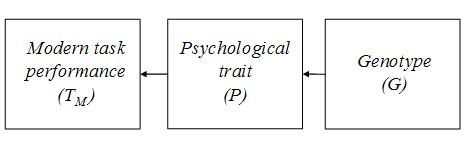
Figure 2: Evolved psychological traits in modern humans
What characterizes IS-EP research is the search for an evolved psychological trait P, whose development is influenced by a genotype G, and for a technology-related impact on the performance of a modern task TM. In these scenarios, the technology usually adds elements that help shape a modern task environment in which the task is accomplished.
While there is no word limit, it is recommended that chapters have less than 10,000 words. To facilitate production, MS Word will be used in the preparation of the book. Authors may prepare their chapters using the chapter example provided below (recommended), or following the chapter preparation instructions provided by Springer (authors in the past expressed difficulty with this option).
All document exchanges (e.g., submission of chapter documents) will take place via email, with exception of the copyright transfer form (for which the printed version is needed - see copyright transfer instructions). Please use the following emails to interact with the editor: nedkock@gmail.com, nedkock@stx.rr.com (alternative email: nedkock@tamiu.edu).
Chapter authors have the option of simply using the chapter example below (prepared for another Springer book by the Editor), as a basis for their chapters. The sections, subsections, and other items are already formatted as required by Springer. If you do not know the number of your chapter (likely to be the case, since chapters will be developed independently from each other), please use "XX" instead.
Springer uses a chapter format detailed in a PDF document with chapter preparation instructions, which authors may decide to use in the preparation of their chapters. However, authors in the past expressed difficulty to the Editor (in other book projects) in using these instructions. Both the PDF file document with chapter preparation instructions, and the chapter template (.dot file), are available from the link below.
Chapter preparation instructions and template from Springer (.zip file).
References must follow the APA style. See these APA style referencing instructions (PDF file).
One separate short bio and contact information file must be provided for each chapter author. It is to be provided as an MS Word file, named using the following convention: "JohnDoe_BioAddress.doc". See this example (MS Word file).
Chapter authors are required to complete the copyright transfer form below. The form is a PDF file, which has to be printed out, filled out, and mailed to Carolyn Ford on the address below. The PDF file cannot be filled out using a computer (Springer does not allow that for legal reasons). It has to be printed out first, before it is filled out.
Copyright transfer form (PDF file).
Carolyn Ford, Edit. Asst.
Springer
Business & Economics / OR & MS
101 Philip Drive | Norwell, MA 02061 | USA
Tel: +1 (781)-871-6600
carolyn.ford@springer-sbm.com
The publications below illustrate some of the ideas that can be explored by authors. Authors are encouraged to review these publications, but should not restrain themselves to the ideas explored in them. In fact, this book welcomes chapters with ideas that go significantly beyond those discussed in the publications below, and also chapters with ideas that go against the arguments made in these publications.
Kock, N. (2009). Information systems theorizing based on evolutionary psychology: An interdisciplinary review and theory integration framework. MIS Quarterly, 33(2), 395-418. (PDF file)
Kock, N., Chatelain-Jardón, R., & Carmona, J. (2008). Incorporating simulated animal attacks in human-technology interaction interfaces: The predictive power of biosemiotics and evolutionary psychology. International Journal of Technology and Human Interaction, 4(4), 68-87. (PDF file)
Kock, N. (Ed.) (2008). Darwinian perspectives on electronic communication: Special issue of the journal IEEE Transactions on Professional Communication. Washington, DC: IEEE Computer Society Press. (Web site with PDFs of articles)
Kock, N., Verville, J., & Garza, V. (2007). Media naturalness and online learning: Findings supporting both the significant- and no-significant-difference perspectives. Decision Sciences Journal of Innovative Education, 5(2), 333-356. (PDF file)
Kock, N. (2005). Media richness or media naturalness? The evolution of our biological communication apparatus and its influence on our behavior toward e-communication tools. IEEE Transactions on Professional Communication, 48(2), 117-130. (PDF file)
Kock, N. (2004). The psychobiological model: Towards a new theory of computer-mediated communication based on Darwinian evolution. Organization Science, 15(3), 327-348. (PDF file)